
Why Understanding Customers Is Getting Harder, Not Easier, and What Actually Helps
A friend recently sent me a Linkedin article, “The Infrastructure Gap: Why Decision Quality Is
the Real AI Bottleneck in GTM” by Alan Zhao, about AI, infrastructure, and decision-making,
and it stopped me in my tracks, not because it was technical, but because it described a
frustration I often hear from marketers.
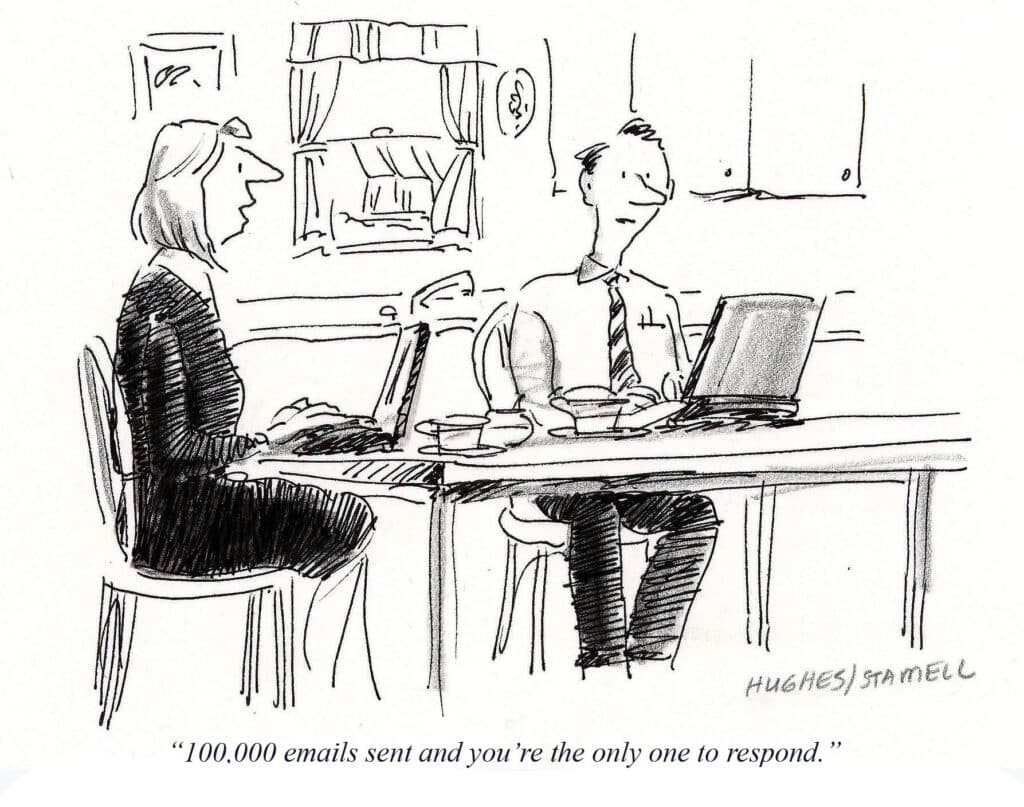
Most companies are doing more than ever. More emails. More campaigns. More content. More
automation. Yet many feel less certain than ever that they understand their customers, are
relevant to their lives, or are building real relationships that convert into long-term value.
The irony is that the tools we use to “scale” marketing may be making the problem worse.
By 2026, it’s projected that more than 400 billion emails will be sent every single day. That’s
right. Four hundred billion messages competing for attention, relevance, and trust. In that
environment, it’s no wonder response rates fall, loyalty erodes, and brands struggle to stand
out, even when the product is excellent.
The issue isn’t effort. It isn’t creativity. And it certainly isn’t a lack of data.
The issue is noise.
Most marketing systems are built to broadcast. They are very good at telling. They are far less
capable of listening, interpreting, and learning. They track what people clicked or bought, but not
why they cared, what they felt, or what changed their perception of a brand over time.
This is where Alan Zhao’s point about “decision quality” resonated with me. The real bottleneck
isn’t how fast we can send messages or generate content. It’s whether we have the right inputs
to make good decisions in the first place.
If your understanding of customers is limited to opens, clicks, and transactions, you’re missing
the richest layer of insight available: their language.
When customers explain why they love a wine, why they stopped buying a skincare product,
why they trust one travel brand over another, or why a watch feels meaningful to them, they are
giving you strategy in their own words. But that language is usually found in surveys, emails,
NPS responses, comments, and call notes, scattered, unstructured, and largely ignored
because it’s hard to analyze at scale.As a result, many brands default to assumptions, averages, and personas that feel increasingly disconnected from reality.
What actually helps is not more messaging, but better listening.
When you systematically collect customer language, append it to individual customer records,
and analyze it for patterns, motivations, and emotional drivers, something changes. Noise
becomes signal. Gut feelings become evidence. And marketing shifts from “What should we
send next?” to “What actually matters to this group of people right now?”
This approach is especially powerful in aspirational categories like wine and spirits, food and
beverage, beauty, travel, watches, and jewelry, where purchase decisions are deeply emotional,
identity-driven, and relational. People don’t just buy products, they buy meaning, stories, and
alignment with their values.
In a world where attention is scarce and trust is difficult to achieve, the brands that win will not
be the loudest. They will be the ones that understand their customers well enough to speak
less, say more, and build relationships that feel human.
AI can absolutely help with this, but not when it’s used only to accelerate output. Its real value is
in helping us make sense of what customers are already telling us, if we bother to listen.